
Goodbye 333
Reflections on resentment, stability, fairness, and family

About a month before my move to El Paso, my mom texted me this:
“Can you check the mail? Key should be in the shoe cabinet drawer. Also, let us know if you can talk for a few minutes after 5. I received an offer from USC in LA so we will be moving this spring. 😆”
It was a big text delivered as a casual afterthought, a method of receiving information I’d grown relatively familiar with over the years of being my parents’ child.
In many ways, I respect their ability to downplay. I do it too. Why make a big deal out of the inevitable? Why make room for protest when the deal is already done?
When it comes to “doing business,” my parents are my biggest role models.
I was standing a block away from the apartment, my childhood home of 27 years, when I replied:
“wowie congrats mom!”
Months before this text, as part of my mom’s suggestion to save money, I offered up my room in Brooklyn to a friend of a friend for the weekend while I stayed, rent-free, at my parents’ place.
Poorly planned, I forgot my roommate and I were hosting a party in our apartment that Friday, and going to a birthday party downtown on Saturday. Two nights in a row, I trekked back to my childhood bedroom un-sober and exhausted. At 2am, sitting on my twin bed on wheels, I ate dry cereal (the only snackable thing in the pantry) while staring at all the books, trophies, and trinkets that cluttered the shelves.
My closet boasted a huge stack of magazines, dating back to my first Vogue September issue, 2008. I perused the TTYL book series that got banned from our fourth grade class because (from what I remember) they talk about thongs and sex. I opened a dusty box that housed a decrepit Barbie in it and cried. I had taken shrooms earlier in the night and honestly didn’t feel anything until I held the Barbie in my adult-sized hand and imagined my younger, more innocent self, meticulously applying the blue marker eye shadow and hacking this woman’s hair with a pair of kitchen scissors.1 Ever since I was little, I craved a fresh cut.
Of course, once the tears started, it was hard to make them stop. For years, this room was my private oasis where I could do whatever and be whoever I wanted.
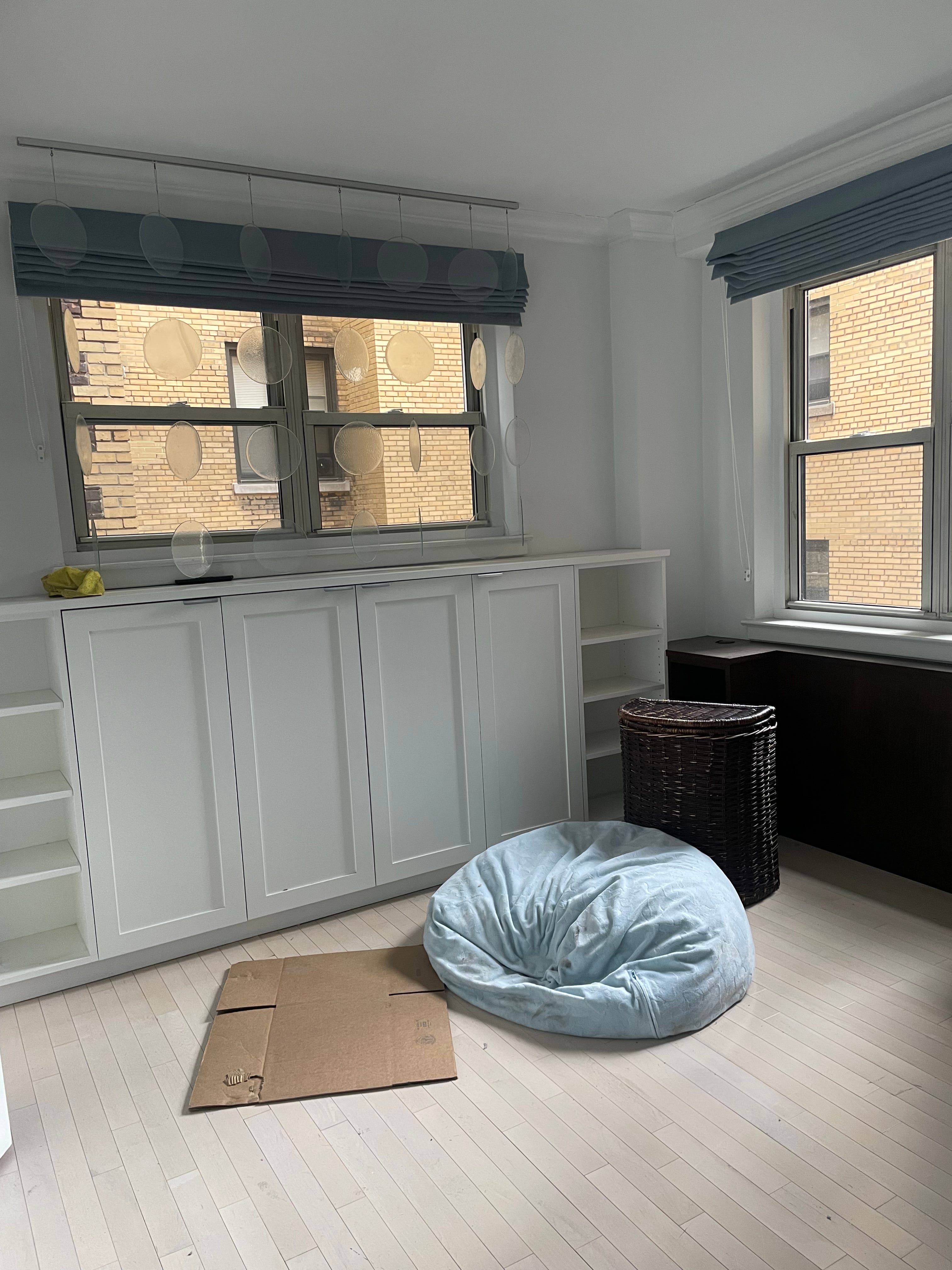
I looked around and returned to all the times I cried in this specific space. On the desk when I couldn’t bear to finish my homework because it felt impossible. On the floor when I thought everything, including myself, sucked. In front of the mirror when my brother got a Nintendo DS for his birthday and I was jealous.
In a Scrooge moment, I saw the space, which was now cold and lackluster, filled of me and my imagination. Straightening my hair and applying eye liner until I looked like Jenny Humphrey in her rogue, fuck school, fashion is everything era. Tucking the end of my shirt through the neck hole, so that I could feel just as scandalous as Britney Spears. Putting on my Harry Potter branded reading glasses and using an old glow stick as a wand to cast magic that would make people hot.

As my room also doubled as the laundry room, I did my best to incorporate the steam from the dryer and whirring from the washer. On Fridays and Sundays—common laundry days— every made-up scenario took place in Miami or Texas. Earthquakes became common plot points. Or machines trapped in closets that needed magic to return people back to their original, hot, selves.
Now heavily sobbing (I was unstoppable), I opened every drawer and tried to piece together some kind of clue. It’s always in therapy where you’re prompted to talk with your younger self. You apologize or encourage. Maybe you give a warning or advice for reassurance. I know I did this exercise before, but I don’t remember what exactly I said. I think because I thought the exercise was stupid. I think I had nothing to say to my younger self—we’d been in communication for so long, I didn’t think my inner child was in the mood to talk to me. All my younger self wanted was to be left alone. To be in her room, playing pretend.
I’m a sucker for a good time capsule. A box of items that capture old memories. A journal of stories and pictures that speak to forgotten mindsets. In many ways, time capsules are an easy, over-the-counter dopamine hack. Something you set aside for the future to build anticipation over, just to reward yourself with how you’ve grown or changed (or not).
One of the best pieces of advice I ever received was from my high school teacher, Ms. Appel. She said to do one thing, the same thing, every day for a year. Whether that’s take a photo, write a sentence, add a sticker to a notebook–it’s easier (and fun) to measure growth when you have a control.
While I didn’t take her up on the advice, the idea itself was strong enough to stick with me.
My dad always said that he and my mom had no intention of moving because of how many times he had to move as a kid. I even made a video about it in the eighth grade, titled: 12 houses. A “digital story” (montage with narration, essentially) about my dad living in twelve different homes before going to college. My teacher cried watching it (my main goal).
For my dad, every year was a new school, new friends, new house. I understood his reasoning. It sounded hard and I’m grateful my parents provided us with a steady backdrop. If anything, I didn’t need Ms. Appel’s suggestion because I already had so many different controls in my life to measure growth. The same house, the same friends, the same foot size since the second grade. While my dad had to be his own control, I was able to measure my developing self every year with ease. Like living in front of a green screen, I grew up with a sense of agency over who I was, where I was, and what it was going to look like.
Sitting in the living room, now dusty and bereft of everything except a couch and two armchairs, my brother and I talked about resentment.
Is resentment preventable or permanent?
I wrestled with the former while my brother feared the latter.
To get a real grip on what we’re talking about-exactly-here’s the definition: Resentment (n.) : “Bitter indignation at having been treated unfairly”
In an interview (for a different video project) my dad explains his position on fairness. The “film” was for my senior thesis in college, a look at two different families and how they hold relationship with their children once they grow old.
This interview with my dad was a lowkey bust (I didn’t use any of the footage in the final cut). He’s on his phone, showing me tweets for half of it. Then, when I ask him: “How did you imagine yourself as a parent?” he jumps into a defense about not imagining anything at all, saying something like: “how could you?”
The question was too broad, I learned that much. But somewhere in this response, he mentions one line of advice he got from his dad, my Akong, who said: “no matter what you do, nothing will seem fair.”
Quite pessimistic, if you ask me. But this piece of poetic cynicism seemed to launch my dad into a whole life’s mindset that benefitted him in the end. By speculation I’d say—he’s happy and somehow has squashed his relationship to holding resentment.
Whenever I think about resentment, I think about the times my ego was hurt. When a word problem made no sense and my brother had to explain it to me, and that still didn’t make sense—so I’d resent both the word problem and my brother.
Or when I did a favor for a friend that went unnoticed or unappreciated —I’d resent the fact that I even offered to do it in the first place, as well as the friend who asked.
The sting of feeling misunderstood, unseen, or undervalued, feels like that initial thing that got your windshield to crack. It’s alarming at first, but once you see it’s not harmful (in the moment), you let it go. The crack is normalized. Maybe it grows overtime, but the rate is so slow, it’s easier to drive with the crack than fork up the money to fix it when there’s still a possibility it could be a non issue.
I get it. I’m big on putting things off, too. This assumption that my current self is unready or inadequate to perform, yet the firm trust in my future self to make it happen (in T-10 minutes before midnight) — is how I operate, whether I like it or not.
But when it comes to resolving resentment, I don’t trust my future self. I know I will never say anything the more time goes by. I know it only makes talking harder to do, rather than easier. When the stake is not an external deadline, but rather an internal time bomb on when you won’t be able to hold in the anger anymore, I’d rather not.
In talking about the dynamic of having multiple children and making things fair, my dad mentions that kids will always see things as unfair. The younger child will always be jealous of what their older sibling can have, even if they are told they will get that phone, that Nintendo DS, that ability to free roam the block, when they reach the same age. That would be fair, but of course it never feels fair. “Kids don’t get that,” my dad says in the interview, shaking his head.
I’m not sure what my dad is really referencing here. My parents gave me a cellphone when my brother got a cellphone. They gave me a debit card when he got a debit card. My brother never complained and despite random bouts of jealousy, neither did I. Maybe my dad assumed that if it’s all going to be unfair no matter what you do, might as well choose the option that’s better business for the parent.
I’m not an angel number kind of spiritual, but I don’t knock it either. I’ll do my wish at 11:11 if I see it. I made a mental note of “that’s cool” when the date was 2/24/24. I don’t connect dots with numbers though. At least, it’s not something I’ve ever instinctually done. That being said, I grew up in building number 333.2
According to USA Today (trustworthy?) “The angel number 333 encourages to set plans into action and let your personal strength be the guide; to trust yourself and put thought into your choices. This angel number also is connected with optimism, creativity and intuition.”
Being in the apartment that raised me for the last time, I felt weird. I wanted it to be more of a time capsule dopamine hit, but instead I felt an eerie sense of nothing. While the structure, the walls, the floor plan, remain true to my childhood, the place was really just a green screen, no camera, no special effects available.
When friends asked me about the move, about how I was feeling about all of it, I thought back to my one weekend in my bedroom just a few months ago. Before I even knew my parents were selling the place and leaving, I knew my choice to go to El Paso was something monumental in the scheme of making a choice instead of leaning on a permanent address, my constant backdrop to tell me who I was. Instead, I needed a new control that would force me to consider who I will be.
As an adult, I now understand why my dad was so keen on kitchen scissors not being used for anything outside the kitchen
Not to mention, Julie who I live with in El Paso now, grew up in building number 444. Coincidence? Maybe not!